Vegetarian postnatal nutrition: recovery and breastfeeding without meat
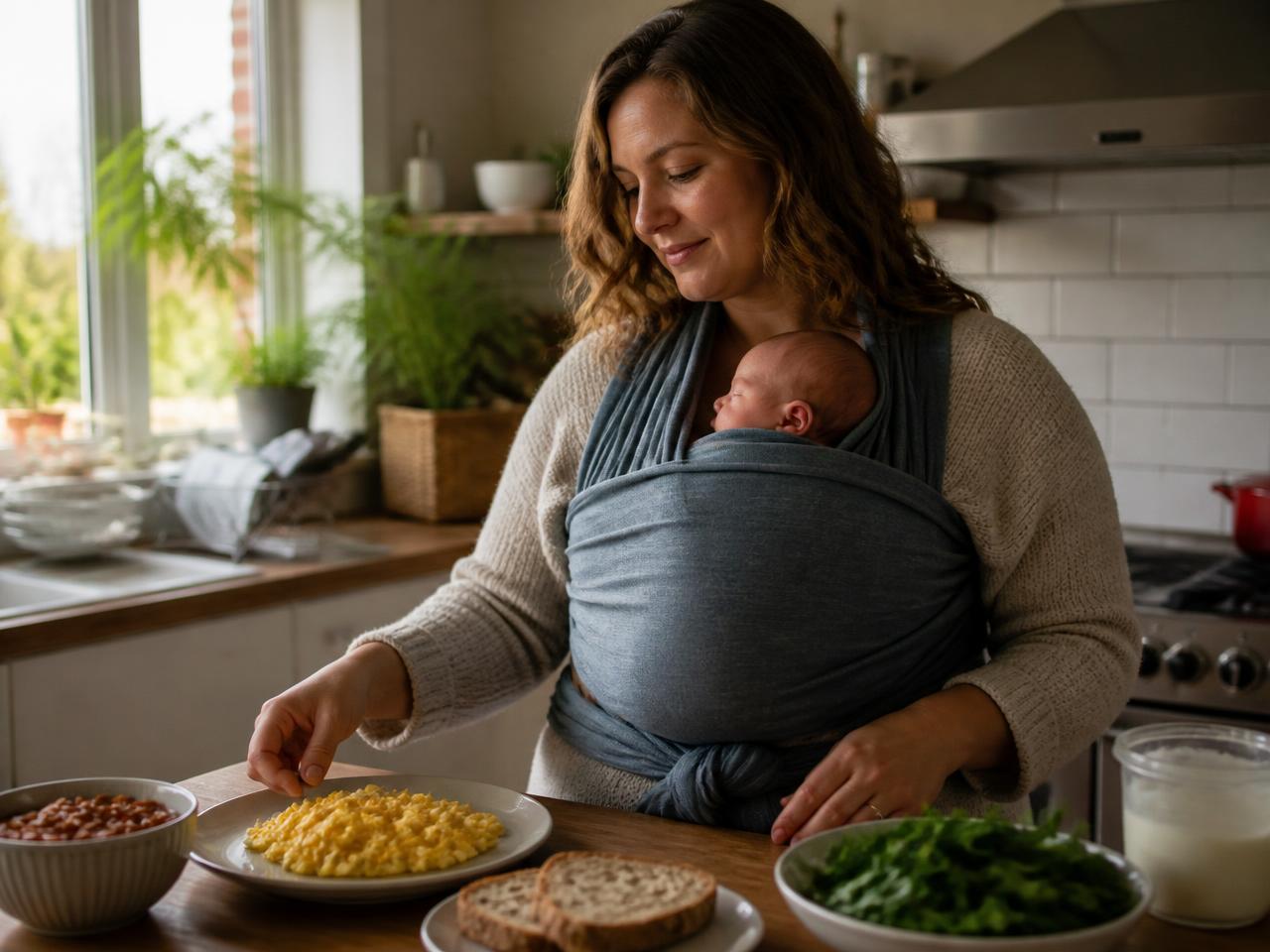
A vegetarian diet that includes eggs and dairy covers most of what recovery and breastfeeding ask for without much fuss. Two nutrients need thought — iron and long-chain omega-3 — and the rest is really about eating often enough when your hands are full.
Iron is the main one
Blood loss at birth depletes iron, and vegetarian diets rely on non-haem iron, which the body absorbs less efficiently. Low iron is one of the most common reasons new mothers feel far more exhausted than the sleep alone explains.
Strong vegetarian sources:
- Lentils, chickpeas, butter beans, kidney beans
- Tofu and tempeh
- Fortified breakfast cereals — check the box, many provide a large share of a day's iron
- Eggs
- Spinach, kale, spring greens
- Dried apricots, pumpkin seeds, cashews
Two habits do most of the work: add a vitamin C food to every iron-containing meal (tomatoes, peppers, citrus, berries), and move tea and coffee away from mealtimes, since both reduce absorption. Dairy at the same meal also reduces iron absorption a little, so the cheese and the lentils do not have to be at the same sitting.
If you feel persistently breathless, dizzy or wiped out, ask your GP for a blood test rather than self-prescribing iron tablets.
Omega-3
Without oily fish, long-chain DHA intake is low. Eggs from hens fed omega-3 enriched feed help a little. Include ALA sources daily — walnuts, flaxseed, chia, rapeseed oil — and consider an algal DHA supplement, which is vegetarian and does the job directly.
Vitamin B12 and iodine
Eggs and dairy generally cover B12, so a supplement is not usually needed if you eat them regularly. If your diet has drifted mostly plant-based, treat B12 like a vegan would and supplement.
Iodine is well covered by dairy and eggs. If you have swapped most dairy for plant milk, check whether that milk is iodine-fortified — most is not.
Vitamin D
The NHS advice applies to everyone: consider 10 micrograms daily, and give breastfed babies their own drops.
Protein and zinc, quietly
Zinc supports wound healing and comes largely from meat in a typical UK diet. Vegetarian sources: dairy, eggs, wholegrains, pulses, nuts and seeds. Get a protein source into every meal and snack and zinc usually follows.
Meals that survive a newborn
- Breakfast: fortified cereal with milk and a satsuma; eggs on wholemeal toast
- Snacks: cheese and oatcakes, Greek yoghurt with fruit, boiled eggs, nuts and dried apricots
- Lunch: baked beans on toast with a tomato salad; halloumi and chickpea salad
- Dinner: lentil bolognese, spinach and paneer curry, three-bean chilli, veggie tray bake with feta
- Freezer: double the bolognese and chilli every time
Once your baby starts solids at around six months, most of these meals adapt straight to their plate — just remove their portion before adding salt.
Do not eat less on purpose right now
Breastfeeding and healing both need energy. The first months after birth are not the moment for restriction. Regular meals and snacks, and a bottle of water where you feed.
How Circle helps
Circle's shared shopping list means the eggs, the tinned pulses and the fortified cereal get replaced by whoever is out and about, without you having to ask twice. And the shared day log lets a partner or grandparent see when you last ate and last sat down.
Ten days free, then £1.99 a month.
This article is general information, not medical advice, and reflects NHS guidance at the time of writing. Speak to your GP, midwife or health visitor if you are worried about iron levels or your recovery.