Eating well after birth on a standard diet: a no-fuss guide
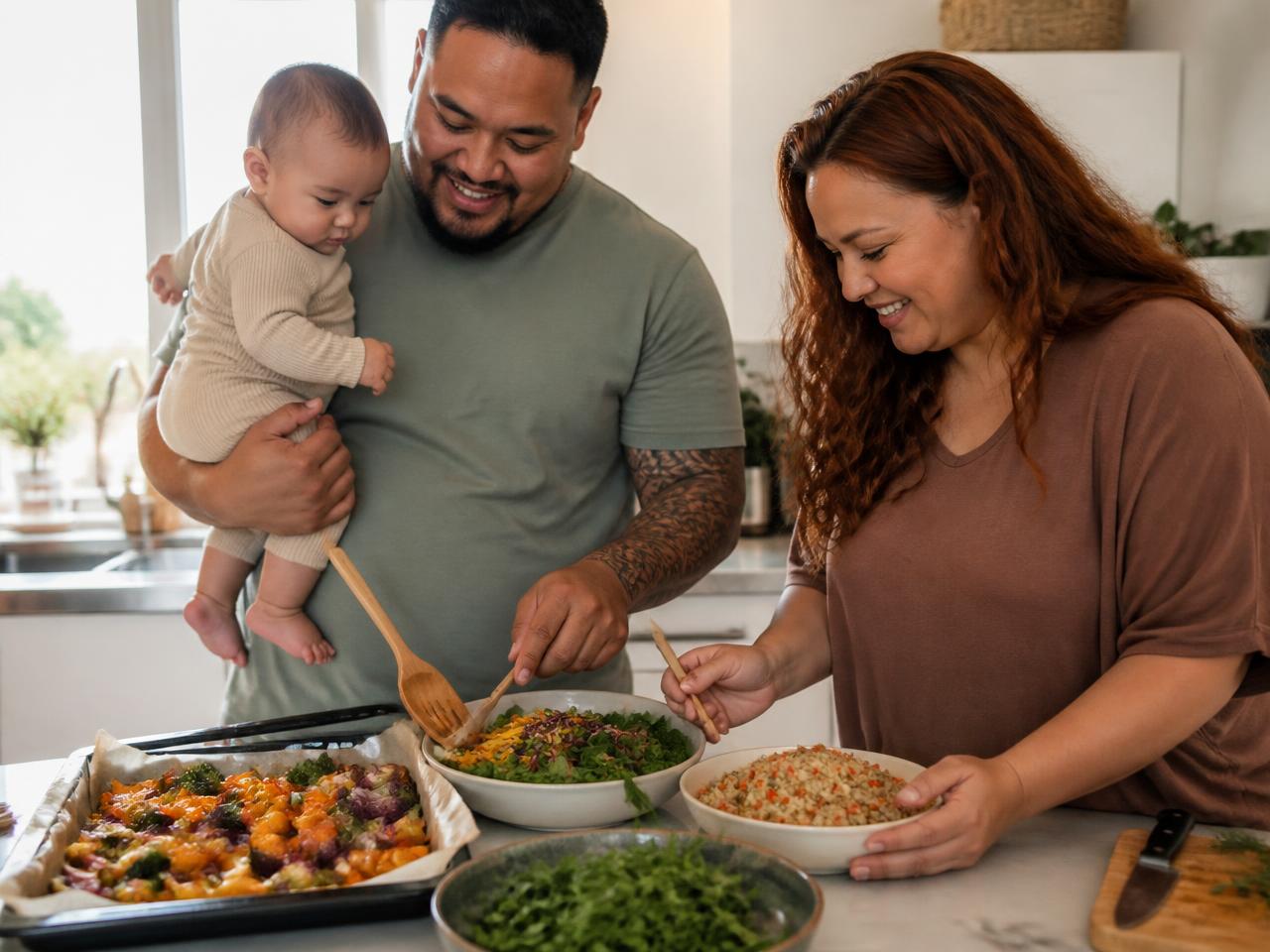
If you eat meat, fish, eggs and dairy, postnatal nutrition is mostly straightforward. The problems are practical rather than nutritional: nobody has time to cook, everything gets eaten cold, and the biscuit tin is closer than the kitchen.
Here is the short version of what matters, and how to make it survivable.
The five things that matter
- Vitamin D — the NHS advises considering 10 micrograms daily for all adults, especially in autumn and winter. Breastfed babies need their own drops.
- Iron — birth costs you iron. Red meat, darker poultry meat, pulses, fortified cereals and leafy greens, with vitamin C alongside plant sources.
- Protein at every meal — repair and milk production both need it.
- Fibre and fluids — constipation after birth is common and miserable, and painkillers and iron tablets make it worse.
- Oily fish, once or twice a week — for omega-3.
Fish: the specific rules
While breastfeeding, the NHS advises:
- One to two portions of oily fish a week (salmon, mackerel, sardines, trout) — no more than two
- Avoid shark, swordfish and marlin
- Limit tuna
- Otherwise, most other fish and shellfish are fine, and the pregnancy restrictions on soft cheese, pate and rare meat no longer apply once your baby is born
That last point surprises people. After birth you can have the brie and the runny egg again.
Caffeine and alcohol while breastfeeding
Caffeine passes into breast milk. The NHS suggests keeping to around 200mg a day — roughly two mugs of instant coffee — and remember energy drinks and some cold remedies count.
Alcohol also passes into milk. An occasional drink is not considered harmful; timing it just after a feed gives your body the longest window to clear it. Regular or heavy drinking is a different matter, and never share a bed or sofa with your baby after drinking.
Foods you do not need to cut out
Unless your baby has diagnosed symptoms, there is no need to avoid spice, garlic, onions, beans, cabbage or dairy while breastfeeding. Colic and fussiness are rarely caused by your dinner. If your baby has blood in their stool, severe reflux, poor weight gain or worsening eczema, speak to your GP or health visitor before removing food groups.
Realistic meals for the first months
- Breakfast: porridge with milk and berries; eggs on toast; Greek yoghurt with granola
- Snacks by the feeding chair: cheese, boiled eggs, nuts, bananas, oatcakes and hummus, flapjacks
- Lunch: jacket potato with tuna or beans and cheese; leftovers from last night
- Dinner: chilli, shepherd's pie, chicken and vegetable tray bake, salmon with new potatoes and greens, a curry
- Always double the batch, always freeze half
Accept the food people offer
When someone asks how they can help, the honest answer is usually "bring dinner". A shared shopping list makes that easier than a polite text — people can see what you actually need and pick it up without a conversation.
Weaning arrives sooner than you think
At around six months your baby joins the family meal. Cooking one meal and lifting out their portion before you add salt is far more sustainable than cooking twice. Babies under one need no added salt or sugar, no honey until twelve months, and food shaped to avoid choking.
How Circle helps
Circle keeps feeds, sleeps, nappies and medicine in one shared log so nobody has to be asked, and the shared shopping list means the person at the supermarket already knows what ran out. Small things — but on four hours of sleep, small things are the whole game.
Ten days free, then £1.99 a month for the whole circle.
This article is general information, not medical advice, and reflects NHS guidance at the time of writing. Speak to your GP, midwife or health visitor if you are worried about your recovery, your energy levels or your baby's feeding.