A weaning schedule that isn't a schedule: starting solids at six months
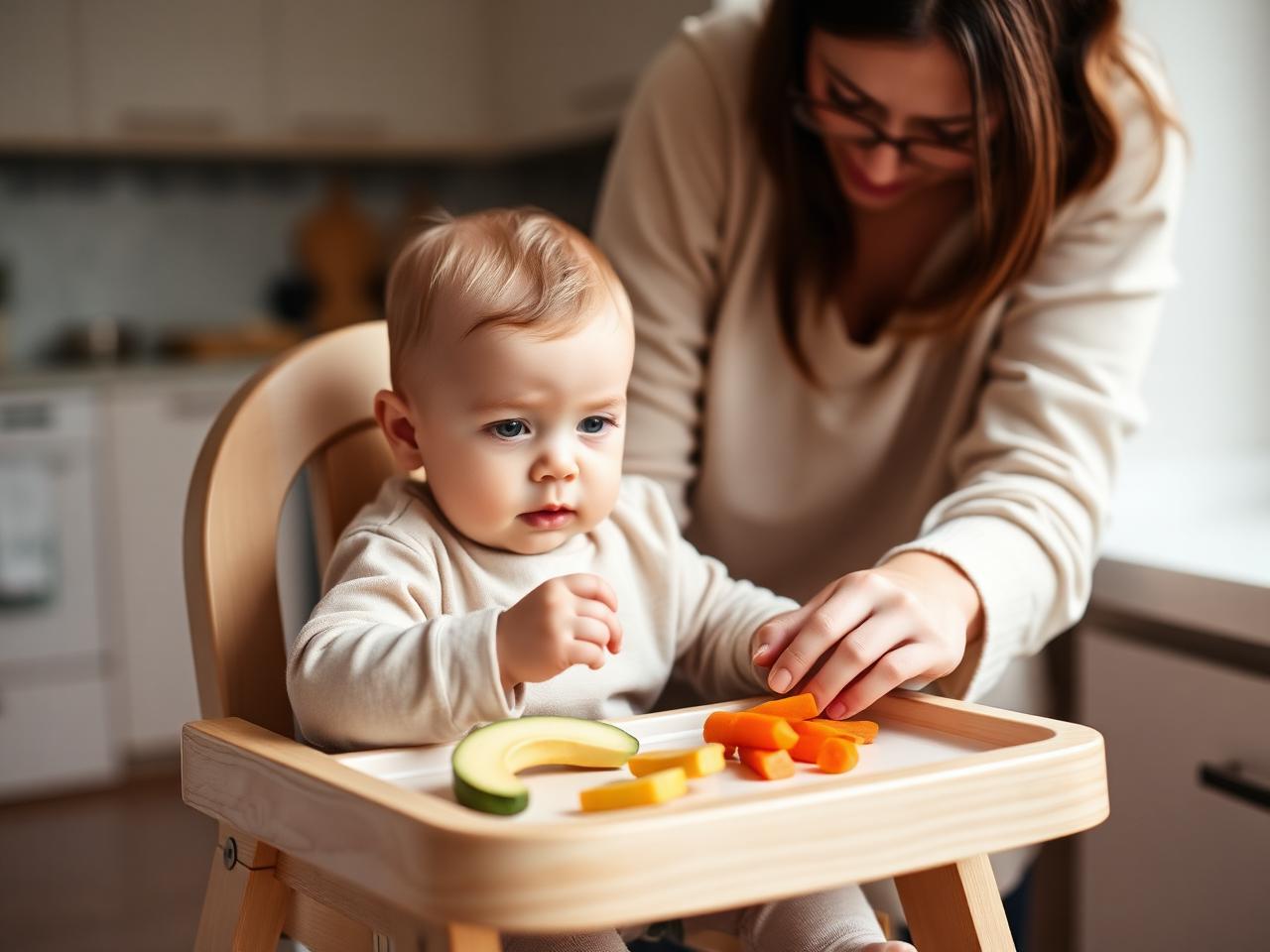
The NHS advises starting solid food at around six months. Not four, not "whenever they seem interested" — around six months, alongside continued breast milk or formula.
That is the single most useful fact in this article, and it is worth stating clearly because the pressure to start earlier is relentless and comes from every direction, usually with great confidence and no evidence.
The three signs of readiness
There are exactly three, and your baby should be showing all of them:
- They can stay in a sitting position and hold their head steady.
- They can coordinate eyes, hands and mouth — look at food, pick it up and put it in their mouth by themselves.
- They can swallow food rather than pushing it back out with their tongue.
Now the part that saves a great many families weeks of confusion. The NHS is explicit that these are not signs of readiness for solids, despite being widely believed to be:
- Chewing fists
- Waking in the night when they previously slept through
- Wanting extra milk feeds
All three are completely normal at around three to four months, and all three are usually developmental rather than nutritional. A baby waking more at four months is very likely going through the 4 month sleep regression, not asking for baby rice.
Why six months
Two reasons. By around six months a baby's digestive system and kidneys are mature enough to handle food beyond milk, and their head and neck control is good enough to eat safely. Before six months there is also a small increased risk of infection, and milk provides everything a baby needs until then.
If your baby was born prematurely, ask your health visitor — readiness is usually judged from the due date rather than the birth date, and your team will advise on the right timing.
A stage-by-stage guide
This is a progression, not a timetable. Move at your baby's pace.
Stage one: around 6 months — getting used to food
Milk is still doing nearly all the nutritional work. This stage is about the experience of eating: taste, texture, sitting at the table, the mechanics of it.
Start with one small amount a day, at whatever time suits your household and when your baby is not too tired or too hungry. Try soft cooked vegetables — broccoli florets, carrot sticks, parsnip, sweet potato — or soft fruit like banana, avocado or cooked apple. Mashed, or as soft finger food, or both.
Try single vegetables first, particularly the bitter ones. Broccoli, spinach and cauliflower are less popular than sweet purées, and offering them early tends to widen the palate later.
Expect almost nothing to be eaten. That is the correct outcome at this stage.
Stage two: around 7–9 months — building up
Move towards three meals a day, and start combining foods and textures. Introduce protein and starch: soft cooked meat, fish (check carefully for bones), lentils, beans, eggs, full-fat dairy, pasta, toast fingers.
Mashed and lumpy textures matter here. Babies who move on from smooth purées in this window tend to accept a wider range of textures later.
Stage three: around 9–12 months — three meals plus snacks
Three meals a day plus a couple of healthy snacks, with your baby eating broadly what the family eats — chopped small, cooked soft, and without added salt or sugar. Milk feeds naturally reduce as food increases.
Foods to avoid
- Salt — no added salt, and avoid salty foods. Babies' kidneys cannot cope with it. Watch stock cubes, gravy, bacon and cheese in quantity.
- Sugar — no added sugar, for teeth and for taste preferences.
- Honey — not before 12 months, because of the risk of infant botulism.
- Whole nuts and peanuts — choking risk under 5. Ground nuts and smooth nut butters are fine.
- Raw and lightly cooked eggs — fine if British Lion stamped; otherwise cook thoroughly.
- Unpasteurised cheese, raw shellfish, shark, swordfish and marlin.
- Rice drinks — not as a milk substitute under 5, due to arsenic levels.
- Choking hazards — halve grapes and cherry tomatoes lengthways, remove stones, cut sausages into strips rather than coins.
Always stay with your baby while they eat. Gagging is loud, dramatic and normal — it is a protective reflex. Choking is quiet. Knowing the difference is worth reading about before you start.
Allergens
Current NHS advice is to introduce the common allergenic foods from around six months, one at a time and in small amounts, so you can spot any reaction. Deliberately delaying them is no longer recommended and may increase risk.
The common ones: cows' milk (in food), eggs, peanuts and other nuts, seeds, soya, shellfish, fish, and wheat/gluten. Introduce one new allergen at a time, ideally earlier in the day rather than at bedtime, and leave a couple of days before the next.
If your baby has severe eczema or a diagnosed food allergy, talk to your GP or health visitor before introducing allergens.
Vitamin drops
The NHS recommends a daily vitamin D supplement of 8.5–10 micrograms for breastfed babies from birth, and for formula-fed babies once they are having less than 500ml of formula a day. From six months to five years, a vitamin A, C and D supplement is recommended for most children.
Purées, baby-led, or both
Either. Both. The evidence does not strongly favour one, and most families end up doing a mixture — finger foods for the fun of it, a loaded spoon for yoghurt and porridge, because nobody wants to hand a baby a bowl of soup.
Do not let anyone make you feel you have chosen wrong. There is no purity test in weaning.
How Circle helps
Weaning generates a surprising amount of information to keep track of, and it is almost always held in one person's head.
Circle logs solids alongside milk feeds, so the whole picture sits in one place — useful when a grandparent does Tuesdays and needs to know that egg was introduced on Sunday with no reaction. Because allergen introduction works best as a careful sequence, having a shared record of what was tried, when, and what happened is genuinely practical rather than just tidy.
Circle also offers age-appropriate food and recipe suggestions as your baby moves through the stages, and you can export a week's summary if your health visitor asks how weaning is going.
Ten days free, then £1.99 a month for your whole circle.
The reassuring part
Weaning takes a year. It is meant to. Under twelve months, food is about exploration and practice — milk is still the main event nutritionally, which means every rejected meal, every spat-out spoonful and every day your baby eats nothing but a breadstick is genuinely fine.
Parents put themselves under extraordinary pressure over this. Please try not to. You are not behind. Your baby will not be the only teenager who cannot eat solid food.
Offer, stay relaxed, eat with them, and let them lead. That is nearly all of it.
This article is general information, not medical advice, and reflects NHS guidance at the time of writing. For advice about your own baby — particularly around allergies, prematurity or growth — speak to your health visitor or GP.